Skip to content
Free first-look review - send your URL and Paul replies personally

AI SEO consultancy

AI SEO Consultant

AI search visibility.
Built to win customers.

I'm Paul Gordon — 18+ years of hands-on SEO, now deep in AI search. Call it AI SEO, generative engine optimisation (GEO) or answer engine optimisation (AEO) — the labels keep changing, but the principle doesn't: good SEO translates, in many cases, into good AI SEO. I test and track that daily, and nearly two decades of doing the fundamentals well is the head start.

  • 18+ years of hands-on SEO
  • Strategy and delivery by me
  • Evidence before AI hype

The focus of my AI consultancy

Understand it. Benchmark it.
Improve it.

Choose an area to see what I investigate, how I approach it and where the evidence stops.

Replacing the number one spot in organic search.

Track and improve how your brand and website are seen in Google's AI Overviews — the answers now sitting where the number one result used to.

Process stagesSequence, not a measured timeline
  1. Understand where they appear — details

    Starting from the organic keywords we already track, I identify which of your searches now trigger an AI Overview.

  2. Review AI answers — details

    I pull those answers in and review what's actually being said — and whether you're part of it. Answers can vary between checks and users.

  3. Inspect linked sources — details

    I look at where Google is getting its information from — what it's referencing, and whether there are patterns worth acting on.

  4. Find content gaps — details

    I compare the answers against your site and find where supporting evidence is missing or could be stronger.

  5. Prioritise useful work — details

    Quick wins first, then I prioritise where the site needs improving.

  6. Repeat the checks — details

    This moves quickly, so the checks have to happen frequently — and I explain what's changed each time.

An appearance is an observation, not a guarantee of future inclusion.

The way Google wants people to search.

Another layer on top of organic search — I investigate your priority terms and how your brand and website are referenced inside AI Mode.

Process stagesSequence, not a measured timeline
  1. Understand your position — details

    Based on your main targeted keywords — direct and contextual — I see where your brand actually sits across the consideration, comparison and purchase stages.

  2. Map the query fan — details

    AI Mode expands one search into many behind the scenes. I look at which parts of that fan you're missing from, and which need bridging.

  3. Check comparisons — details

    I check how you come out when you're compared against competitors, and flag anything inaccurate or unsupported.

  4. Review source pages — details

    I inspect the linked pages for relevant facts, clear explanations and evidence that supports the answer.

  5. Clarify your offer — details

    I recommend improvements to the pages that explain who your products or services suit and what buyers need to know.

  6. Benchmark and improve — details

    I benchmark it, review the data, and work on what improves your chances of being seen — keeping changing AI answers separate from confirmed traffic and sales.

Question paths illustrate the investigation, not recorded customer journeys.

Check how assistants describe your business.

I sample relevant questions in ChatGPT, Claude and other agreed assistants, keeping the platform and search setting with every observation.

Process stagesSequence, not a measured timeline
  1. Agree relevant tools — details

    We choose the assistants that are relevant to your customers rather than treating every available platform as equally important.

  2. Set a repeatable sample — details

    I keep the question, platform, date and whether web search is enabled with each check, so comparisons have context.

  3. Review descriptions — details

    I examine where your brand shows up — and doesn't — across awareness, consideration, comparison and purchase questions, including omissions and factual errors.

  4. Inspect citations — details

    Where links are shown, I inspect the sources. I do not assume that an answer without links has freshly retrieved your website.

  5. Address evidence gaps — details

    I find where assistants lack the evidence to recommend you — on your website and your external profiles — and build it.

  6. Bridge the gap — details

    I compare how you come out against competitors, then benchmark, improve and re-check — closing the distance to the brands being cited.

A single recommendation is not a reliable visibility benchmark.

Separate a mention from an actual page retrieval.

I examine access, indexation and citations, investigating which pages AI systems retrieve where that evidence is available.

Process stagesSequence, not a measured timeline
  1. Identify relevant pages — details

    I identify the pages doing the retrieval work — driven by the query-fan data rather than guesswork — and check the content is useful and current.

  2. Check access — details

    I review crawlability and applicable access restrictions. Allowing access does not mean a system will retrieve or cite a page.

  3. Review indexation — details

    I examine search indexation, canonical signals and internal links to find genuine technical barriers.

  4. Inspect linked citations — details

    I distinguish an unlinked brand mention from a citation to a specific page, and check which URL is actually shown.

  5. Check retrieval evidence — details

    Where reliable retrieval evidence is available, I examine it separately. A displayed link is not proof of a new fetch or a human visit.

  6. Resolve real barriers — details

    I prioritise access, linking and content improvements supported by the findings, rather than supposed AI shortcuts.

A citation alone does not prove a fresh page retrieval.

Connect the observations to business outcomes.

I read search visibility alongside traffic, enquiries and sales. I'll be straight: nobody can track this perfectly — the job is to cover it as well as it can be covered, and learn from it.

Process stagesSequence, not a measured timeline
  1. Define useful outcomes — details

    We agree what makes an enquiry useful, the KPIs that matter and which sales or other outcomes count for your business.

  2. Review search context — details

    I read Search Console impressions and clicks as broader search context — and nail down your brand messaging, because what you say and what search shows have to agree.

  3. Identify AI referrals — details

    Where analytics identifies a referral from an AI platform, I examine the landing page and subsequent behaviour. Not every interaction sends a referral.

  4. Check enquiries & sales — details

    I connect identifiable visits to recorded outcomes where your tracking supports it, distinguishing useful enquiries from raw activity.

  5. Explain attribution gaps — details

    Unlinked mentions and later direct visits often cannot be attributed reliably. I make these gaps explicit rather than filling them with estimates.

  6. Decide what comes next — details

    We use the observations and confirmed outcomes together to decide which work deserves attention, noting other changes that may affect performance.

All of it — Search Console, GA4, your organic keywords — still gets tracked as one landscape. This crosses over with search as a whole: I can slot in alongside your existing SEO team, or run the whole thing myself.

Make your business understandable and credible.

I compare your website with relevant profiles, reviews and independent coverage to find inconsistencies and strengthen genuine evidence.

Process stagesSequence, not a measured timeline
  1. Clarify business facts — details

    I establish the correct business name, services, locations and positioning so the review starts from facts.

  2. Review your website — details

    I check whether your pages clearly describe the business, its offer and the people behind it.

  3. Check external profiles — details

    I compare relevant external profiles with your website and flag outdated details, contradictions and misleading descriptions.

  4. Assess reputation evidence — details

    I review your review presence and how you're managing it — plus credible independent coverage — looking for gaps that might put a customer off. No invented reviews, ever.

  5. Resolve inconsistencies — details

    I prioritise factual corrections and clearer descriptions. Structured data should describe the evidence, not invent authority.

  6. Recheck representation — details

    I revisit how relevant search and AI systems describe your business, noting remaining inaccuracies and limits on what can be controlled.

The aim is an accurate picture of your business, not manufactured authority.

Find out what AI is telling people about you.

You can do everything else right — but if AI surfaces something off-putting when someone checks out your brand, that's where you lose them. This is about finding it before your customers do.

Process stagesSequence, not a measured timeline
  1. Track your brand questions — details

    I track brand and contextual searches about your business daily — what AI actually says when someone checks you out.

  2. Spot what puts people off — details

    I go through the data looking for anything surfacing in AI answers that could cost you a customer — wrong facts, old grievances, missing reassurance.

  3. Find the source — details

    I work out where it's coming from — a review profile, an old page, a third-party site — because that's where it gets fixed.

  4. Improve and re-check — details

    We deal with it, then keep tracking to confirm the picture has actually changed.

Perception problems get fixed at the source, not papered over.

AI SEO focused on commercial outcomes.

This is the aim. I'll be straight with you: hard proof of concept is difficult in AI search right now — nobody can track it perfectly. What you get from me is measurement, transparency and behaviour you can see, so we work out what's working on a probabilistic basis instead of pretending it's exact.

Measurement approachAn illustration of how I read the data — not live figures. Open any node to see where it comes from and what it can't tell you.

Signals — useful, not the goal

VisibilityImpressions & clicks
Collected from
Google Search Console
What it tells us
How often your pages appear in Google results, and how often people click through.
Limits
Google samples and anonymises some queries, and figures arrive with a delay. It shows demand, not buyers.
PositionPage-one keywords
Collected from
Rank tracker — a sampled keyword set
What it tells us
Where a chosen set of commercial keywords sits over time, by device and location.
Limits
A sample, not every search. Results vary by person and place, so a position is a snapshot, not a promise.
AI searchAI citations & Overviews
Collected from
Tracked prompt samples across AI Overviews and assistants
What it tells us
Whether your brand or pages get cited when people ask AI systems the questions your customers ask.
Limits
Prompt tracking is never exhaustive, answers change run to run, and a mention without a link is not a click.
BehaviourSessions & events
Collected from
Google Analytics 4
What it tells us
What organic visitors do on the site: pages viewed, forms started, add-to-baskets.
Limits
Depends on cookie consent and a correct tag setup, so it undercounts. Treat it as a trend, not a full headcount.

The bottom line

Enquiries, sales and revenue.

EnquiriesQualified leads
Collected from
Your CRM or enquiry inbox
What it tells us
Form fills and calls your team actually rates as real opportunities, not every submission.
Limits
Needs an agreed definition of "qualified" and source fields captured at intake. Spam and duplicates get removed.
Sales & revenueOrders & revenue
Collected from
Ecommerce platform or CRM closed deals
What it tells us
Orders and revenue from organic search, checked against the system that takes the money.
Limits
Adjusted for refunds, cancellations and duplicate orders. Attribution across channels is never perfect, so the method is shown, not hidden.
  1. Agree which conversions count
  2. Reconcile analytics against CRM and orders
  3. Report the method and its gaps

What do you need help with?

Illustrative · not live data or client results
Choose questions with a business purpose

We agree who buys, what they need to understand and what makes an enquiry useful. That keeps the investigation focused on decisions rather than collecting AI mentions.

Illustrative · not live data or client results
Inspect the answer and its sources

I record the question, date and linked sources. Inclusion in one answer is an observation, not a promise that every customer sees it.

Illustrative · not live data or client results
Select an assistant to see what I check
Answer → linked sources

Check the answer and any sources shown. Record whether web search was used; do not assume every response retrieves your page.

Description → supporting evidence

Review how the business and buying options are described. Record the mode and linked evidence before comparing with other assistants.

Platform → repeatable check

Agree which other assistants matter to your customers. Keep the question, date, search setting and cited pages with each observation.

Compare like with like

Each check records the assistant, question, date and whether web search was used. Different answers are not directly interchangeable benchmarks.

Illustrative · not live data or client results
Build a consistent picture

Website details, relevant profiles, genuine reviews and independent coverage should describe the same business. Evidence matters more than invented authority signals.

Illustrative · not live data or client results
Where attribution stops

Identifiable referrals can be checked against enquiries and sales. Unlinked mentions and later direct visits often cannot be attributed. These bars are decorative, not quantities or results.

  1. Illustrative · not live data or client results
    Choose questions with a business purpose

    We agree who buys, what they need to understand and what makes an enquiry useful. That keeps the investigation focused on decisions rather than collecting AI mentions.

    01

    Start with your customers and your commercial priorities

    I start by understanding what you sell, who buys it, and when and why they actually buy — the pain points, the discovery phase, the nurturing in between. Together we agree the consideration, comparison, purchase and brand questions worth investigating. If you're a new business, we look at your competitors and agree the priorities from there.

  2. Illustrative · not live data or client results
    Inspect the answer and its sources

    I record the question, date and linked sources. Inclusion in one answer is an observation, not a promise that every customer sees it.

    02

    Understand your visibility in Google’s AI search

    First, understanding: how your brand is perceived in AI search against your core KPI keywords, translated into the direct and contextual questions people put to AI systems. The data is collected every day over a 30-day period, so you see how often you're cited — and where you sit across the awareness, consideration, comparison, purchase and brand phases.

  3. Illustrative · not live data or client results
    Select an assistant to see what I check
    Answer → linked sources

    Check the answer and any sources shown. Record whether web search was used; do not assume every response retrieves your page.

    Description → supporting evidence

    Review how the business and buying options are described. Record the mode and linked evidence before comparing with other assistants.

    Platform → repeatable check

    Agree which other assistants matter to your customers. Keep the question, date, search setting and cited pages with each observation.

    Compare like with like

    Each check records the assistant, question, date and whether web search was used. Different answers are not directly interchangeable benchmarks.

    03

    Investigate assistants, page retrieval and citations

    I check relevant questions in assistants such as ChatGPT and Claude, look at what's being referenced — including external citations — and map the opportunities worth planning for. Then I review crawlability, indexation, internal links and content clarity so the next steps address real barriers.

  4. Illustrative · not live data or client results
    Build a consistent picture

    Website details, relevant profiles, genuine reviews and independent coverage should describe the same business. Evidence matters more than invented authority signals.

    04

    Make your brand understandable and credible

    Everything gets looked at — your website, your profiles, your entity, your reviews — hunting for the gaps and inconsistencies that quietly undermine credibility. The work is strengthening genuine evidence, not manufacturing authority.

  5. Illustrative · not live data or client results
    Where attribution stops

    Identifiable referrals can be checked against enquiries and sales. Unlinked mentions and later direct visits often cannot be attributed. These bars are decorative, not quantities or results.

    05

    Connect the observations to enquiries and sales

    Reporting lives in SEO Copilot — the console I've built for my clients — where the data is fully transparent: observations, Search Console, traffic, and your actual enquiries and sales, separated honestly so you can see what's confirmed and what isn't.

AI search and SEO belong together. Where the work calls for deeper foundations, see my technical SEO consultancy or a prioritised SEO audit.

You work with me.
Not an AI sales pitch.

I set the direction, analyse the evidence and do the work. There is no layer between the person you speak to and the person making changes to your search strategy.

I track what the major AI systems cite daily for my clients. That gives me observations to investigate, not a formula for getting recommended. Answers can change between runs, models and locations; a competitor appearing once is not a reason to rewrite your whole site.

You also get a customised portal — set up with the KPIs and data we agree, everything benchmarked, tasks and reporting videos all in one place. Organised historically, so you can see what's working, what we're still learning, and what hasn't lifted yet. That last category exists — it depends on your niche, and I'd rather show it than hide it.

My job is to identify a useful next step: fix a crawling issue, clarify a service page, improve an inconsistent business profile, or develop content that answers a genuine buying question. AI search belongs alongside technical SEO, content and reputation — not in a separate box.

There's never a guarantee of citations, rankings or recommendations — from anyone. What this is really about is doing the things your competitors aren't doing yet. The clients of mine who got moving on this in 2025 are now seeing the benefit; I'm hearing a lot of panic from business owners who didn't.


The independent advantage

  • One person accountable for the work

    The calls, the decisions, the analysis and the delivery all come from me — with AI speeding up the workflow, so the analysis reaches me faster and more of my time goes on actually improving things.

  • SEO experience applied to AI search

    My 18+ years are in hands-on SEO, brought to a changing landscape. I won't claim decades of AI consultancy — but I've been heavily testing, tracking and reviewing AI search, and publishing what I find in my insights since 2025.

  • A clear view of uncertainty

    I separate observed citations, tracked referrals and confirmed conversions. Nothing in this space is always positive — it's a learning curve and a pattern of improvement. This is probabilistic marketing now, and I say so.

  • Priorities your team can act on

    I explain the issue, its commercial relevance and the practical next step — rather than chasing a perfect visibility score.

Start with your business.
Not the hype.

Tell me what you sell, who you need to reach and where search is falling short. I'll help you work out whether AI search is the next priority.

Talk to me about AI search

Evidence, not promises.

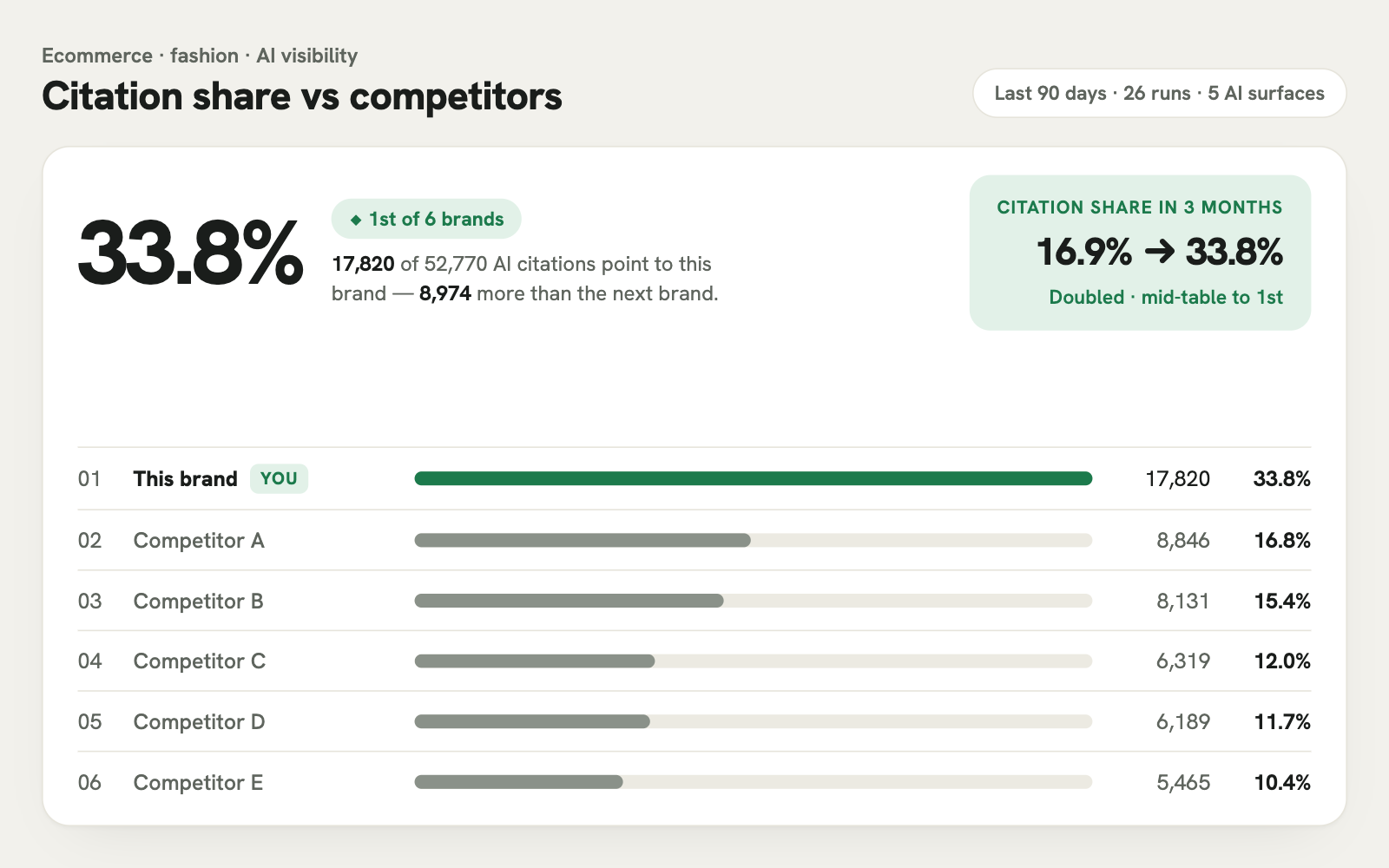
The first AI-specific case study is live: an ecommerce fashion brand taken from mid-table to the most-cited of six competing brands in three months. Here's the shape of it — the full data is on the case study page.

AI case study · ecommerce fashion

Mid-table to most-cited in three months.

Citation share vs competitors: this brand first of six with 33.8% of AI citations

33.8% of all AI citations across the brand and its five closest competitors — 17,820 of 52,770 over 90 days, measured across ChatGPT, Perplexity, Gemini, Google AI Overviews and AI Mode.

Read the full case study

Measurement example · real reporting

A report you can interrogate.

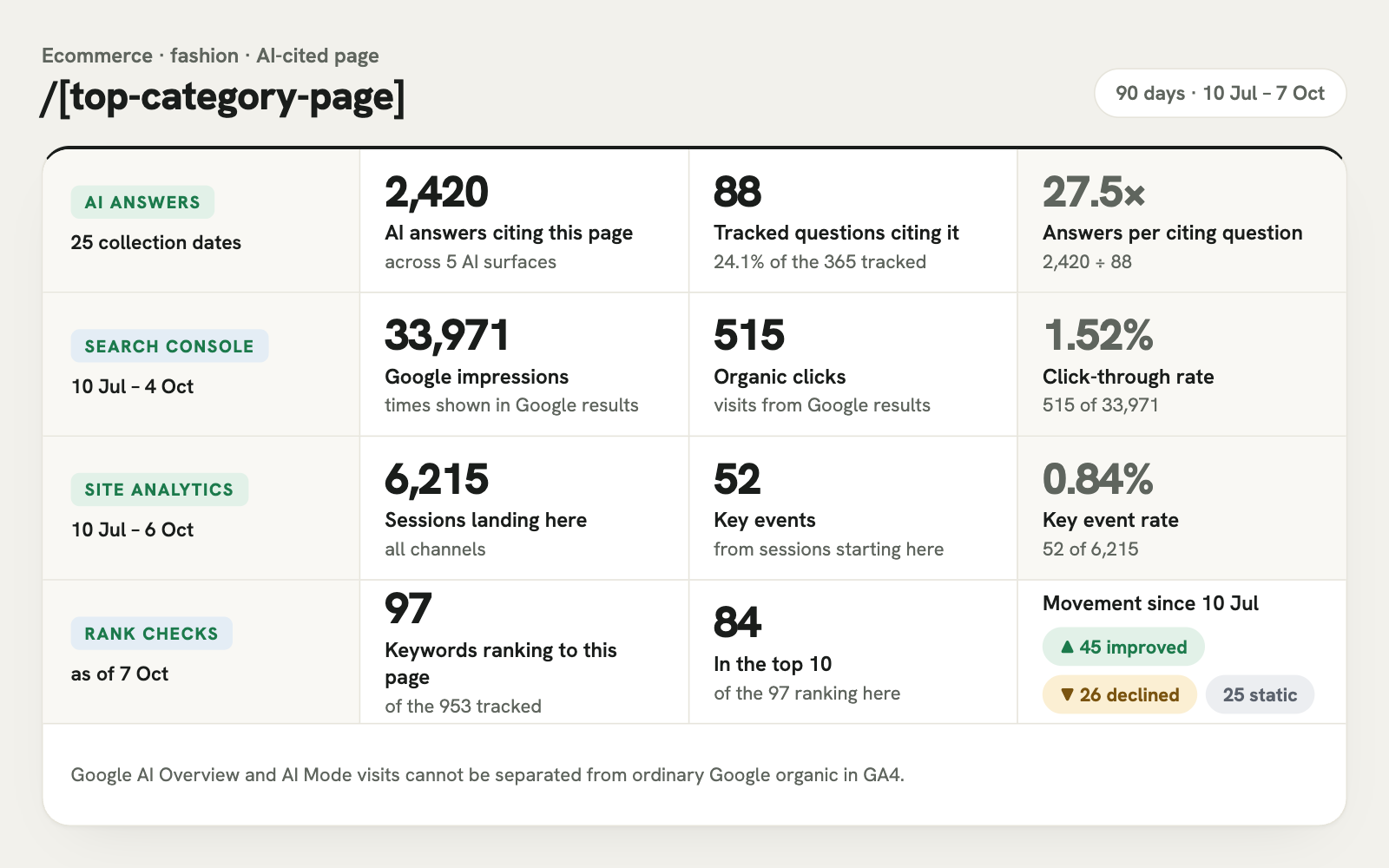
AI-cited page performance: AI answers, Search Console, GA4 sessions and rank checks side by side

One AI-cited page, four data sources side by side: AI answers citing it, Search Console impressions and clicks, GA4 sessions and key events, and tracked rankings. Google doesn't separate AI Overview visits from ordinary organic — so I don't claim it does.

See it in context
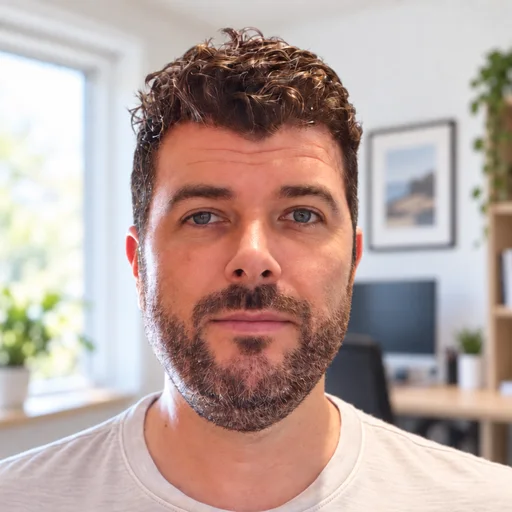
Paul Gordon

The person behind the work

I'm Paul Gordon, an independent SEO consultant with more than 18 years of hands-on experience. I do the work myself. As search changes, I test and measure what I can, keep the practical foundations in place and explain what the findings mean for your business. That is the basis of my AI SEO consultancy.

More about my career

How working with me works

01

Agree the commercial question

I start with your products, services, customers and conversion data. Together we choose the search questions and business outcomes worth investigating.

02

Benchmark and do the work

I review sampled AI answers, citation sources and your SEO foundations. I prioritise the gaps, agree the scope and deliver the practical changes myself.

03

Measure and adjust

I repeat the agreed checks, record what changed and review referrals and conversions where the data allows. I report limitations as well as findings, then adjust the priorities.

Frequently asked questions

Is AI SEO different from normal SEO?

It's an extension of SEO, not a replacement. Good SEO is good AI SEO — or at the very least, it improves your chances. AI is now a layer all the way around search — part of how your customers engage with their phone, their laptop, their computer, and it shapes where they start searching in the first place. The fundamentals still decide who gets cited; AI SEO points them at the right questions.

Can you guarantee we'll appear in ChatGPT or AI Overviews?

No — and nobody honestly can. What I can do is systematically strengthen every signal these systems are known to read — and because I track what they're citing daily, show you the movement.

Does this matter for my industry yet?

I was discussing this with my clients through 2025 — that it was time to invest in this space. Some did, some didn't, and the ones who did are seeing the benefit now. As of late 2026, AI Overviews have saturated far more of organic search, and it's no longer a handful of industries being affected. If organic search matters to your business, this now comes with it.

Where should we start?

A Zoom call. We'll go through your business and your focus, and I'll share anything I've spotted from a quick top-level look that needs discussing. I'll be honest with you — if I think you'll struggle unless bigger things change, like how your reviews are managed or how the brand is perceived, I'll give you my strongest advice. Then I'll put a proposal together for how I'd move forward.

Ready to scale your organic revenue?

Get a straight answer on what isn't working and what it takes to fix it. Every reply comes directly from me.

No sales team - your enquiry goes directly to Paul.