Doubling AI citation share in three months for an ecommerce fashion brand
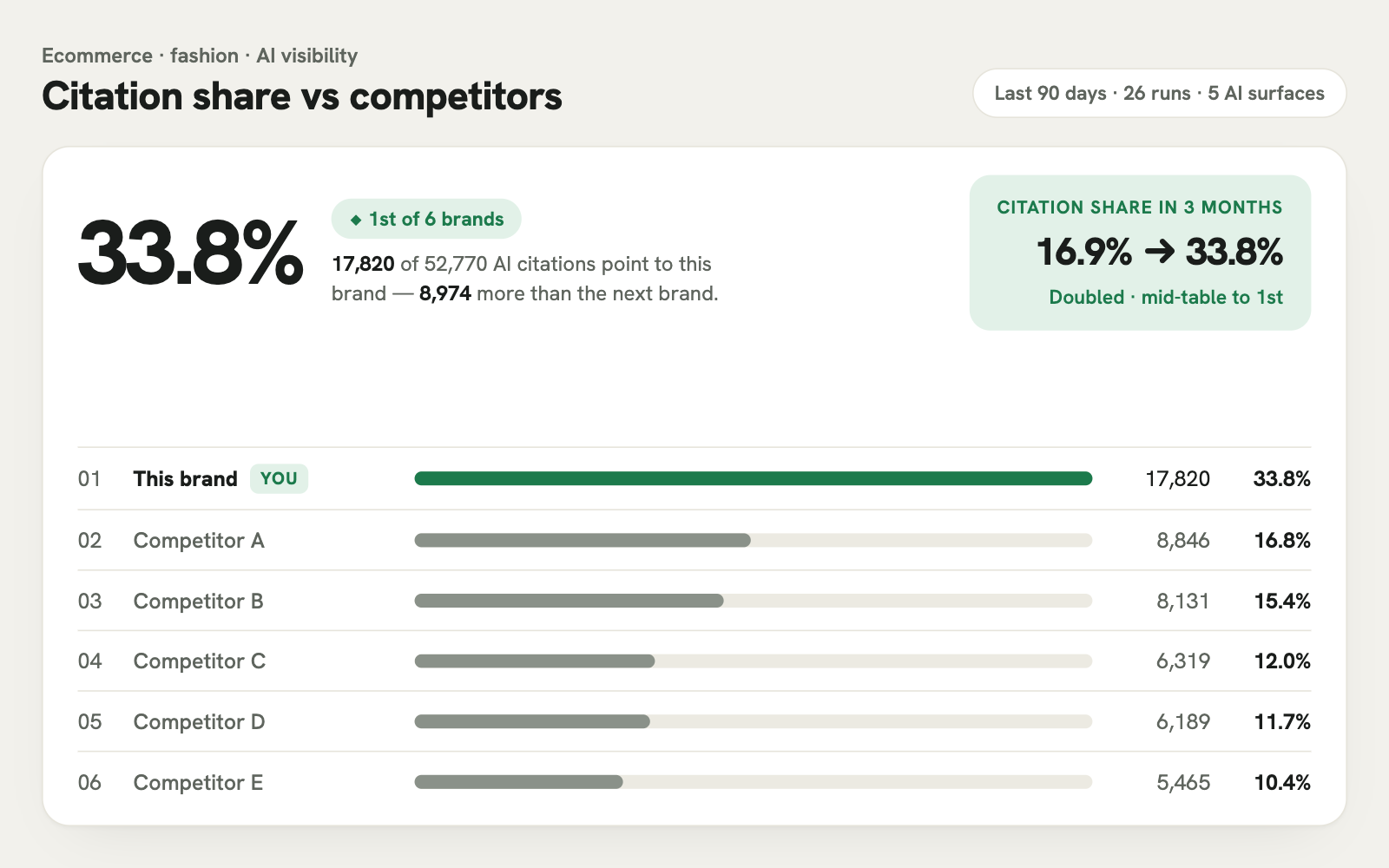
At the start of the year this brand sat mid-table for AI citations in its market. Over three months of tracked work — July to October 2026 — it became the most-cited of six competing brands, with a 33.8% share of citations across five AI surfaces, roughly double where it started.
33.8%
Citation share — 1st of 6 brands
17,820 of 52,770
AI citations pointing to the brand in 90 days
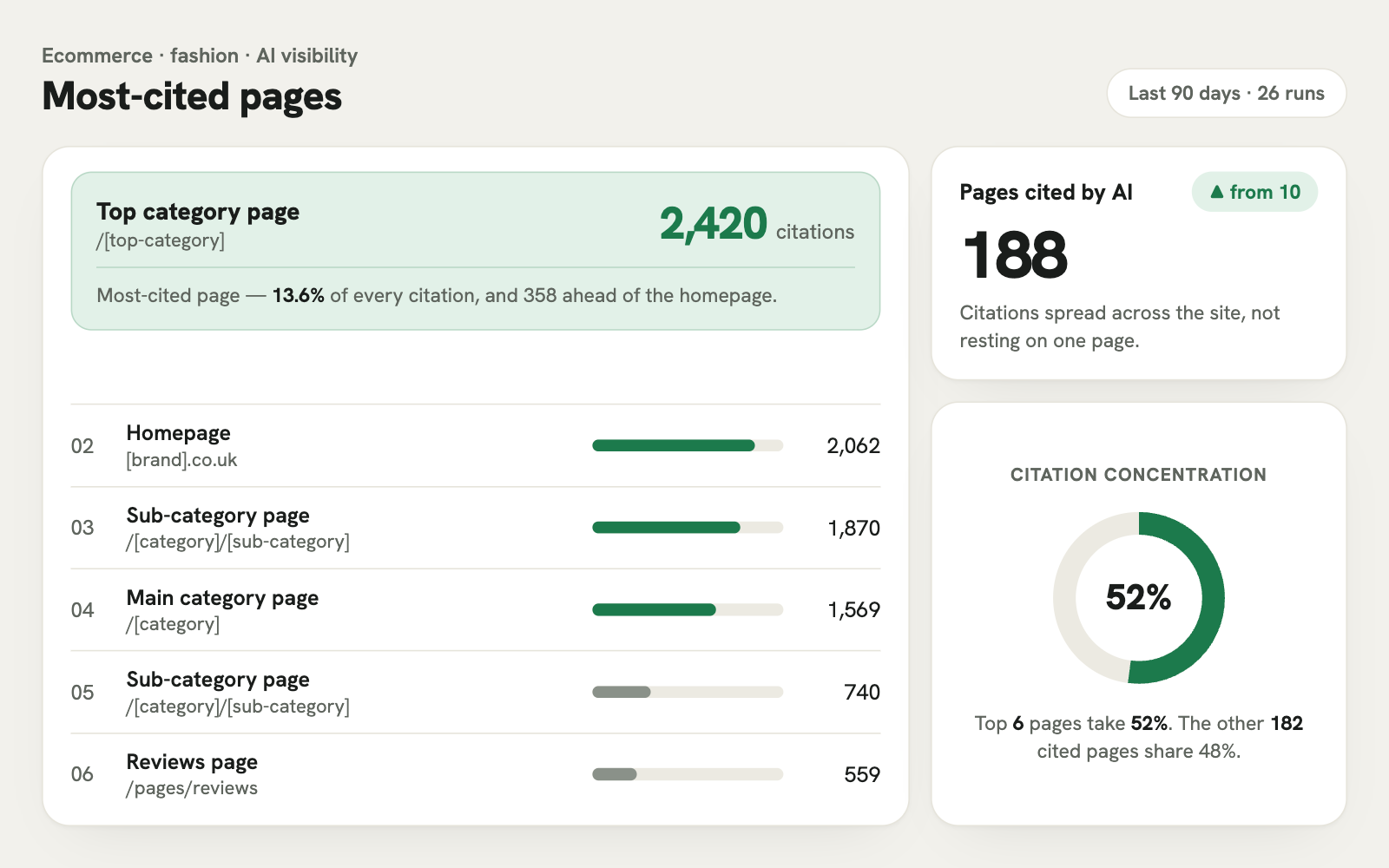
188
Pages cited by AI, up from around 10
95%
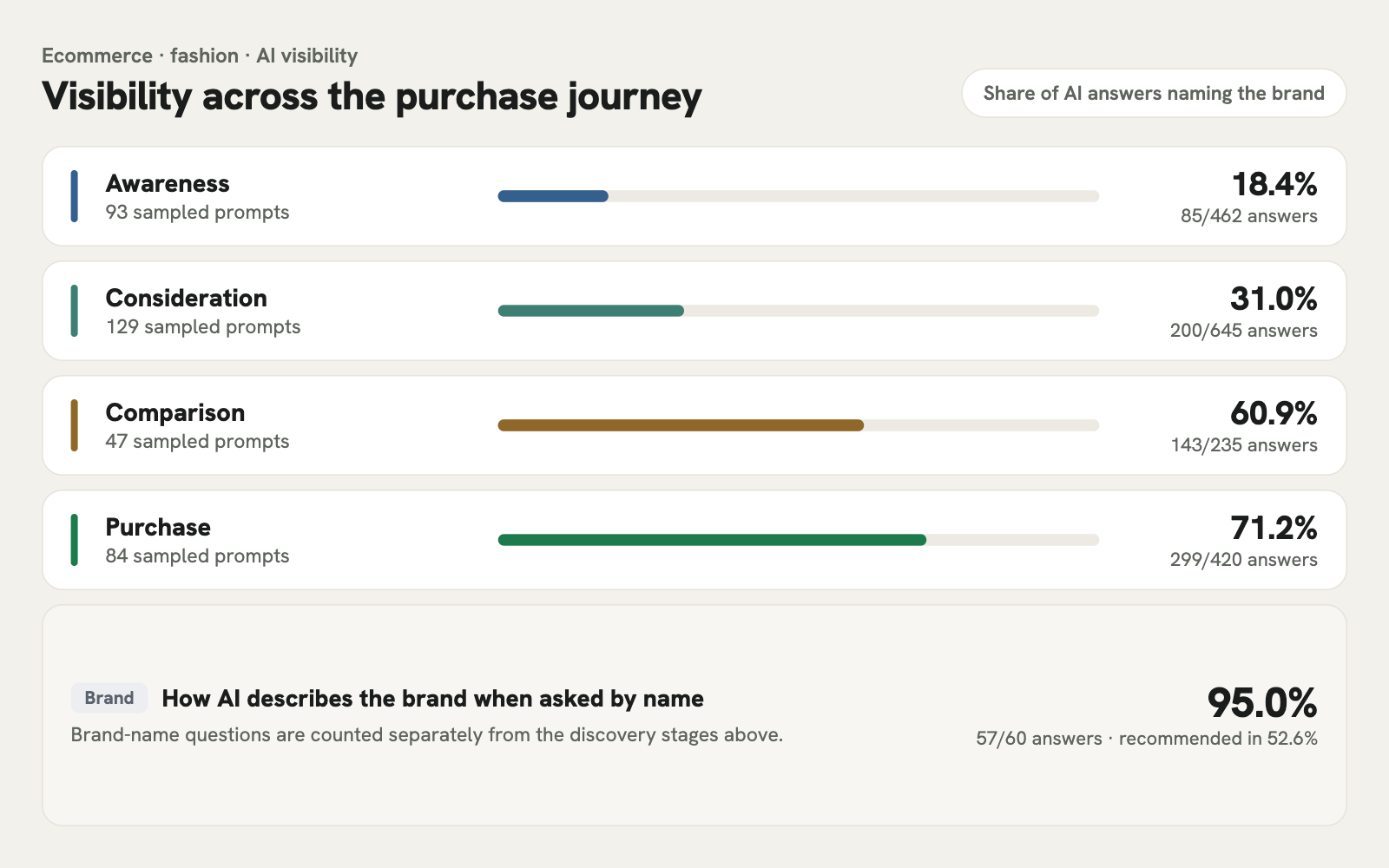
Answers naming the brand when asked directly
Where the brand started
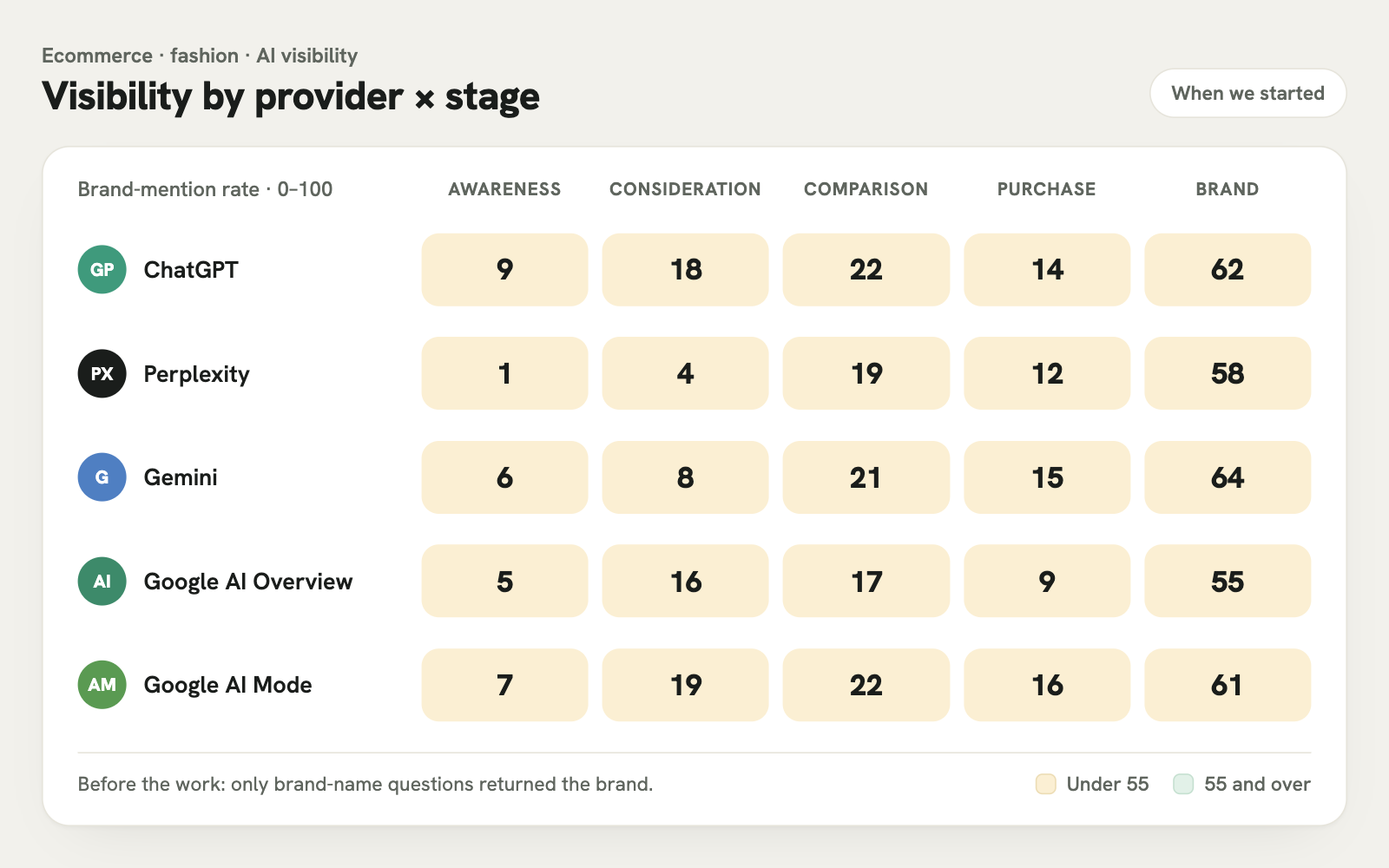
The brand was close to invisible in AI answers unless someone typed its name. When I first measured it, it appeared in fewer than a quarter of answers at every stage of the buying journey, on every AI platform I tracked. Competitors were being recommended in its place — for shoppers asking an AI assistant what to buy, this brand was a mid-table option at best.
Credit where it's due: the client moved early. We started planning for AI search at the beginning of the year, before most of the market was treating it as a channel.
One honest note on the baseline: the daily tracking came in as the work began, so the starting picture is reconstructed from the earliest checks rather than a like-for-like export. That's why I say 'around 10' pages and 'roughly double' — I'd rather under-claim than invent precision.
What I did
The work ran as a daily loop — measure, find the gaps, close them. Six things made it work.
- 1
Track what AI actually says, daily. I ran 365 real shopper questions across five AI surfaces — ChatGPT, Perplexity, Gemini, Google AI Overviews and Google AI Mode — every day. The set mixed the brand’s normal organic keywords with contextual variants of them, so the tracking reflected how people phrase things to an assistant, not just what they type into Google.
- 2
Cover the whole buying journey. Questions were grouped into awareness, consideration, comparison and purchase, so I could see exactly where the brand was weak, where it needed to be, and prioritise the stages closest to a sale.
- 3
Check the sentiment before chasing visibility. I reviewed how the assistants described the brand when it did appear. There was nothing negative to repair — so the effort went entirely on being seen more, not on fixing what was being said.
- 4
Follow the query fan. Some AI surfaces expose the searches they run behind the scenes to answer a prompt. I collected that query fan data and lined the brand’s gaps up against it — if an assistant keeps searching for something the site doesn’t answer well, that’s the page to build or improve.
- 5
Make the site easier to retrieve from. On-site work focused on tightening pages so AI systems could find, lift and cite them more easily — category by category, so assistants had many pages worth citing rather than leaning on the homepage.
- 6
Strengthen the entity off-site. The citation data showed which external sites the assistants were already leaning on. I went after placements there, so the brand showed up in the sources AI was reading, not just on its own site.
The results
Most-cited brand in its market
Over the 90 days from July to early October 2026, 17,820 of the 52,770 AI citations shared between the brand and its five closest competitors pointed to the brand. That is a 33.8% share — more than double the next brand on 16.8%.
Visibility up at every stage, on every platform
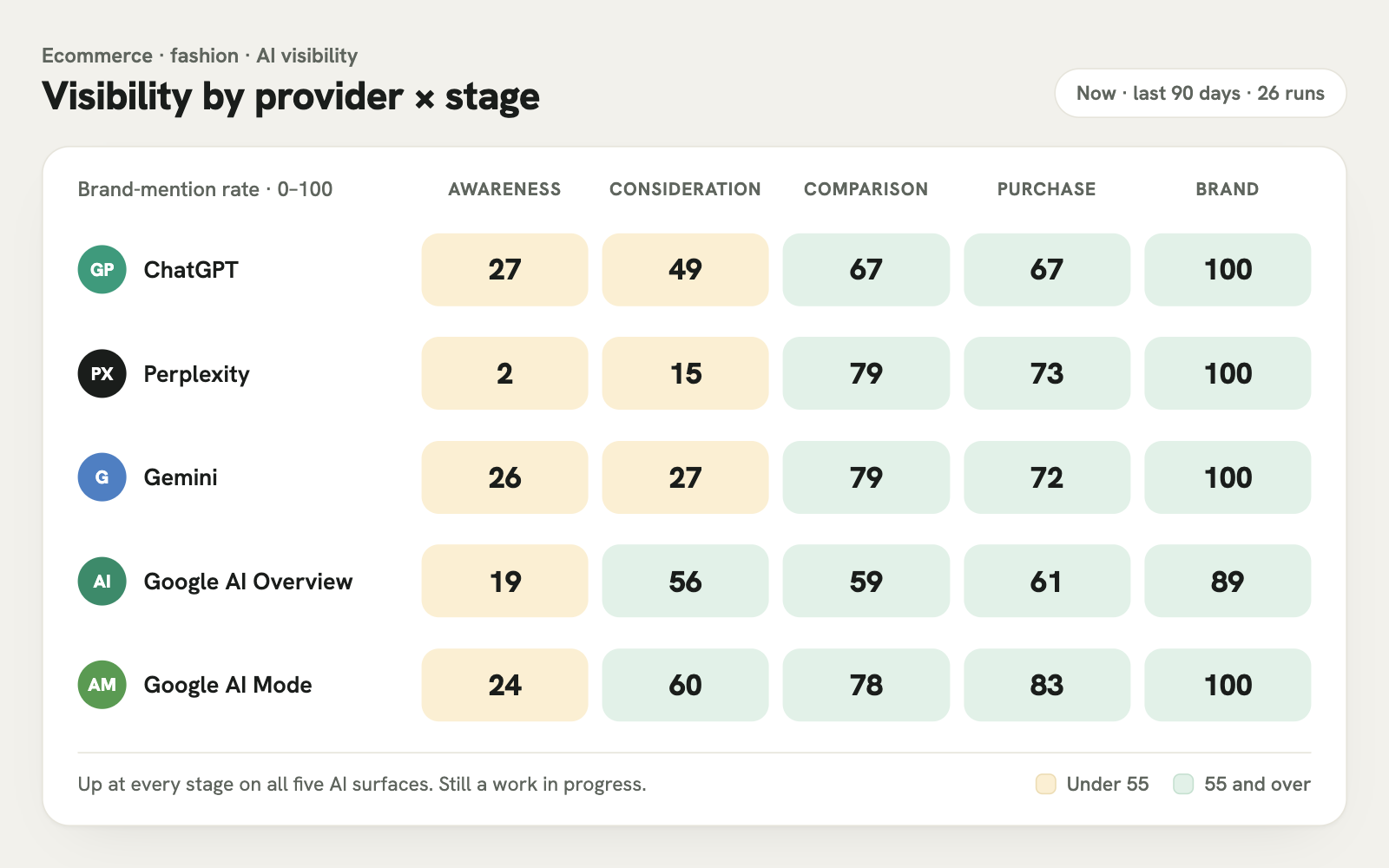
The brand is now named in 60.9% of comparison answers and 71.2% of purchase answers. On comparison questions it appears in 59 to 79 of every 100 answers, depending on the platform. Awareness sits at 18.4% and consideration at 31.0% — the full journey picture is below.
188 pages cited, not one
AI assistants now cite 188 different pages on the site, up from around 10. The top six pages take 52% of citations and the other 182 share the rest, so no single page carries the result. The most-cited page is a category page, ahead of the homepage.
Cited pages that also perform commercially
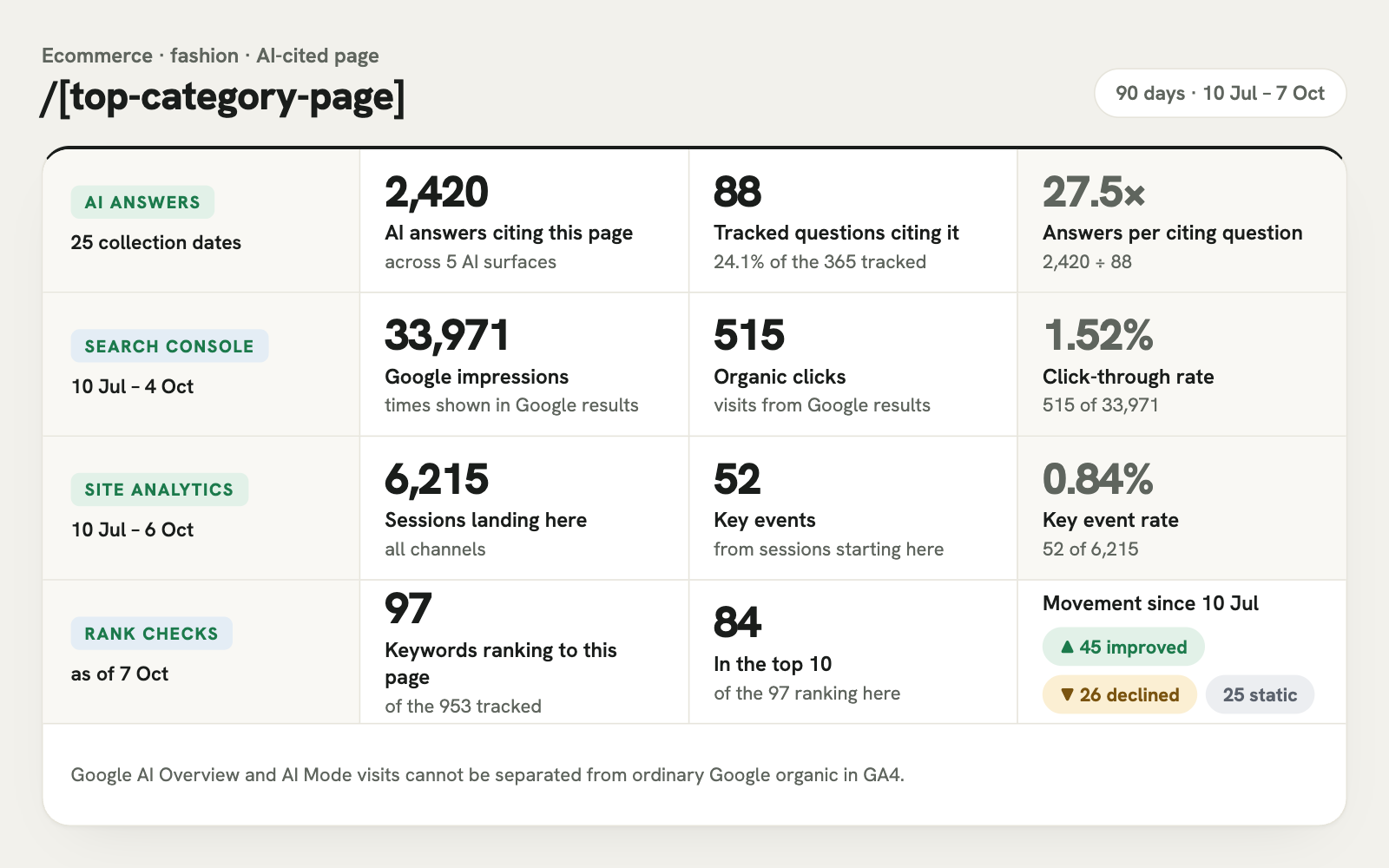
The most-cited page was cited in 2,420 AI answers over 90 days. In the same period it earned 33,971 Google impressions, 515 organic clicks and 6,215 landing sessions, which led to 52 key events. It ranks for 97 tracked keywords, 84 of them in the top 10.
Google does not separate AI Overview and AI Mode visits from ordinary organic traffic, so I report these alongside each other and do not claim the sessions came from AI.
Still a work in progress
This is an ongoing project. Awareness is the weakest stage at 18.4%, and Perplexity names the brand in only 2 of every 100 awareness answers. Those are the next gaps I am working on.